Online Responses
Response 1 - Advocacy in Documentary
One aspect of documentary filmmaking that has greatly stood out to me over the past few weeks has been the style of advocacy. Advocacy refers to the promotion of a specific cause, viewpoint, or movement. These documentaries utilize a rhetorical voice to craft a persuasive argument and inspire action in their audience. Scottish documentary filmmaker John Grierson once said, “I look on cinema as a pulpit.” Indeed, it became a popular one in the early years of the 20th century. In 1929, Grierson made Drifters, a silent documentary following the common yet dangerous lives of North Sea herring fishermen. Other films from other directors followed, such as Night Mail, made for the British General Post Office, and Song of Ceylon, made for the Ceylon Tea Propaganda Board. In the United States, Pare Lorentz’s The Plow That Broke the Plains supported New Deal policies by highlighting societal hardships. This shift marked a move from objective storytelling (E.g., Nanook of the North) to activism, with filmmakers addressing issues like poverty, inequality, and war. When the Second World War started in 1939, documentary became one of the most effective forms of both Axis and Allied propaganda, skyrocketing its popularity. It remains a staple format of modern documentary.
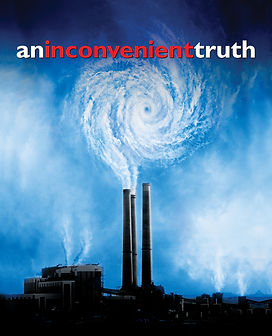
We’ve watched several of these films in class, but I’ll only focus on two here: An Inconvenient Truth and The Corporation. The former follows former vice president Al Gore as he travels around the world, calling for reform while proclaiming the dangers and evidence of climate change. The latter performs a critical analysis of modern corporations, portraying them as psychopathic entities that prioritize profit over ethics, human rights, and environmental sustainability. Each film had a purpose—an argument to make. By weaving together the evidence from various sources, they were both able to make convincing arguments and raise awareness of some of the difficult problems facing global society. It should be noted, however, that advocacy documentary has the ability to lead us down the wrong path. Rather than communicating objective fact, advocacy films reflect the feelings and agendas of the filmmakers. According to Triumph of the Will, made by female director Leni Riefenstahl, Adolf Hitler was a godsend come to deliver Germany. Thus, it is important to recognize the bias inherent in advocacy documentaries. The images and information presented as fact in these films could have more to do with emotional impact than factual accuracy. Ethical advocacy documentaries balance persuasion with integrity, ensuring transparency, fairness, and respect for subjects and audiences.
Response 2 - The Act of Killing vs. Night and Fog
The horrors of war and genocide have been captured and portrayed in various ways through both fiction and documentary filmmaking. However, The Act of Killing (2012) and Night and Fog (1956) are two films that stand out for their distinct approaches in depicting mass violence and its lingering effects. While both films expose the brutal potential of human prejudice and cruelty, they diverge in their methods, narrative structures, and portrayals of those involved in recounting the stories. Night and Fog utilizes archival footage and poetic narration to serve as a somber reflection on the Holocaust. The Act of Killing, on the other hand, adopts a unique, almost surrealist method by allowing former leaders of the Indonesian death squads to reenact their past crimes. These differences in style and approach ultimately shape how the audience experiences and understands these historical events.

One of the most striking contrasts between the two films is their use of visuals. Night and Fog, directed by Alain Resnais, relies heavily on archival footage. Historical Nazi footage of concentration camps is interwoven with contemporary shots of the long-abandoned sites. The visuals are harrowing—starving prisoners reduced to little more than skeletons, rooms stacked floor to ceiling with human hair, and the grotesque sight of bulldozers pushing hundreds of corpses into mass graves. Shots like these are intentionally included for their repulsiveness and shock value. Combined with the poetic yet detached narration of Jean Cayrol, an actual Holocaust survivor, the film emphasizes the incomprehensible nature of the atrocities committed. The Act of Killing, directed by Joshua Oppenheimer, takes a much more unconventional approach. In it, real participants of the Indonesian anti-communist purge of the 1960s are invited to stage dramatized reenactments of their killings. The documentary follows the production and filming of their film, including bloodcurdling interviews where the executioners describe their preferred methods of killing. The murderers, particularly Anwar Congo, gleefully participate, recreating their acts in various cinematic styles, including film noir and Hollywood musical. Rather than relying on historical footage, Oppenheimer uses these performances to expose the psychology of those who committed the genocide and their continued lack of remorse.
...

Both of these films document genocidal war crimes, but the people responsible are portrayed in very different ways. Night and Fog avoids focusing on specific Nazi officials, instead presenting the Holocaust as an institutionalized horror carried out by nameless cogs in the machine. It
emphasizes the systematic nature of genocide, warning that such crimes are not confined to history. The Act of Killing, on the other hand, takes a much more personal approach. Rather than focusing on an institution, the filmmakers follow actual individuals who participated in the events, namely Anwar Congo. The audience learns firsthand how he justifies his actions and suppresses his guilt. Initially, Anwar boasts about the killings, but as the reenactment progresses, he slowly begins to show signs of unease. In a bone-chilling culmination, he tearfully asks the camera operator if he has sinned. While condemning an evil, authoritarian institution of the past may seem straightforward, the audience faces a far more unsettling challenge when confronted with a jovial old man personally responsible for over a thousand deaths. While Night and Fog educates us about how genocide can be supported and systematized by institutions, The Act of Killing reminds us that every crime committed is carried out by a real person.
Each film provokes a strong emotional response in its audience, but through different means. Night and Fog overwhelms with its stark, factual presentation, leaving viewers with a sense of despair and powerlessness. The final lines, asking who is responsible for such horrors, linger as an unanswered indictment of humanity’s capacity for cruelty. The Act of Killing unsettles in a different way. By blurring the line between reality and performance, it exposes the grotesque normalization of violence. The executioners’ absurdity—dressing in costumes, singing about their killings—along with their public praise, force the audience to grapple with how the victors rewrite history.
Night and Fog and The Act of Killing are powerful documentaries that both confront the atrocities of war and genocide despite their differing approaches. Night and Fog adopts a poetic, historical lens, while The Act of Killing takes a psychological and experimental route. Together, these films remind us that human beings are capable of terrible things and that constant vigilance and self-awareness are the only ways to prevent another catastrophe from happening.
Doc Mode Activity 1 - Observational Mode
For my documentary mode activity, I decided to make a film using the observational mode. I wanted to capture an authentic slice of college life, so I got permission to film my sister Kate, her roommate Paige, and a male friend of theirs (I didn't get his name) hanging out in their apartment on a Sunday evening. The piece unfolds naturally as Kate and Paige work on homework, chat about various topics, and offer occasional input on their friend's songwriting.
I chose the observational mode because of its ability to immerse viewers in a candid environment without overt manipulation or commentary. All of the interactions and conversations that occurred happened naturally. I discovered that natural conversation is hard to create
artificially. Real-world interactions between people, even between friends, can be random and unpredictable. I didn’t have any equipment available to me, so this was shot on my iPhone using a gimbal for a little bit of stability. The camera moves quite a bit, but people move in real life. It feels more natural to me than just a steady camera on a tripod, especially given the subject matter.
The anonymous friend’s continuous guitar playing acted as a unifying thread, providing a sense of rhythm and cohesion throughout the film. His occasional pauses to ask for rhyming words, combined with Kate and Paige’s banter, reinforced the communal atmosphere I was hoping to capture. I chose not to include voiceover, text, or additional music, trusting that the natural ebb and flow of their conversation would provide enough context for viewers to engage with the subjects' personalities and relationships.
This documentary follows some principles of "direct cinema" by allowing moments of silence and unscripted dialogue to fill the frame. For instance, Kate and Paige's tangents about Paige's wedding, Dune Pt. 2, and childhood books reveal their dynamic without exposition. The observational mode’s strength lies in these seemingly mundane interactions, which offer insight into their personalities and relationships. Ultimately, this piece emphasizes presence over plot. By resisting narrative structure, I want to invite viewers to simply observe—a method that aligns with the observational mode’s goal of capturing authentic human experiences.
Response 3 - Reflexive vs. Participatory Modes
Documentary filmmaking encompasses various approaches to storytelling, including the reflexive and participatory modes. These stand out as two distinct methods of engaging with reality. While both modes acknowledge the filmmaker’s presence, they differ in how they involve the audience and construct meaning. The reflexive mode draws attention to the filmmaking process itself, questioning the authenticity and objectivity of documentaries, while the participatory mode emphasizes the interaction between filmmaker and subject, making the filmmaker an active participant in the story. These differences shape how the audience perceives truth. Surname Viet, Given Name Nam (1989) exemplifies the reflexive mode by deconstructing documentary conventions and challenging historical narratives, while Sherman’s March (1985) embodies the participatory mode by integrating the filmmaker’s personal journey into the documentary’s narrative.
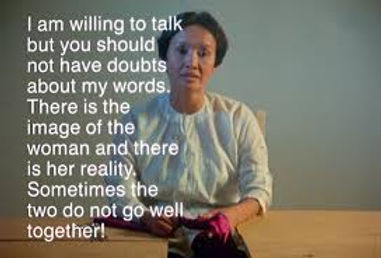

The reflexive mode tries to make the audience aware of how films construct reality rather than simply capture it. This approach questions the assumption that documentaries present an objective truth, instead demonstrating how editing, framing, and narrative choices influence perception. Surname Viet, Given Name Nam, directed by Trinh T. Minh-ha, is a quintessential example of the reflexive mode. The film examines Vietnamese women’s experiences through fragmented interviews, archival footage, and voiceovers that challenge the reliability of historical narratives. Trinh intentionally disrupts traditional documentary techniques by layering conflicting voices and perspectives, preventing the audience from settling into a single authoritative version of events. The film’s use of subtitles that do not always match spoken words further emphasizes the constructed nature of documentary storytelling. Rather than presenting a
seamless historical account, Surname Viet, Given Name Nam forces viewers to question the legitimacy of recorded history and the ways in which cultural identities are shaped by colonialism, war, and media representation. By making the filmmaking process visible, Trinh’s documentary encourages audiences to critically engage with the material rather than just passively consume it.
In contrast, the participatory mode immerses the filmmaker in the documentary’s events, directly engaging with subjects to shape the narrative. This approach acknowledges that the presence of the filmmaker alters the unfolding story, embracing subjectivity rather than attempting to conceal it. Sherman’s March, directed by Ross McElwee, is a prime example of this mode. Initially intended to be a historical exploration of General Sherman’s destructive Civil War campaign in the South, the film evolves into a deeply personal journey as McElwee shifts focus to his own romantic pursuits. McElwee’s onscreen presence and interactions with subjects become central to the film’s structure. His personal reflections, relationships, and moments of vulnerability shape the story, making the film as much about his search for love as it is about history. This direct involvement highlights a key
characteristic of the participatory mode: the filmmaker is not an impartial observer but an active participant. While McElwee’s perspective makes the film highly engaging, it also introduces subjectivity, as the documentary’s focus is filtered through his personal lens rather than an external, neutral viewpoint.
Both the reflexive and participatory modes challenge traditional notions of documentary objectivity but in distinct ways. The reflexive mode, exemplified by Surname Viet, Given Name Nam, disrupts conventional storytelling, compelling viewers to critically analyze how history and identity are represented in media. In contrast, the participatory mode, as seen in Sherman’s March, draws audiences into a personal, immersive journey, fostering emotional engagement through the filmmaker’s direct involvement. While the reflexive mode encourages skepticism and self-awareness by resisting conventional narrative structures, it can be more challenging for general audiences. The participatory mode, on the other hand, offers an intimate and relatable perspective but risks bias due to the filmmaker’s influence over the subject matter. Despite these differences, both modes expand the possibilities of documentary filmmaking, demonstrating that reality is never simply recorded—it is always interpreted, framed, and constructed, shaping how audiences perceive truth.
Response 4 - Representing Communities: Participatory vs. Performative Modes

Documentary films have long served as a platform for exploring underrepresented communities, amplifying voices that might otherwise go unheard. These films shape public understanding by providing personal and societal perspectives on marginalized experiences. The way these stories are told, however, varies depending on the mode of documentary employed. The performative and participatory modes, in particular, offer distinct approaches to representing these communities. While the participatory mode immerses the filmmaker in the subject’s reality, allowing for an interactive exchange, the performative mode emphasizes subjective experiences and emotions, often using dramatization or stylistic choices to evoke empathy. Comparing the participatory documentary Minding the Gap with the performative Will &

Harper highlights how these different modes impact the way audiences understand and connect with the experiences of underrepresented communities.
The participatory mode, exemplified by Minding the Gap, thrives on direct engagement between the filmmaker and the subjects. In this mode, the documentarian becomes an active participant, shaping the narrative through interviews, interactions, and personal involvement. Minding the Gap, directed by Bing Liu, presents an intimate look at the lives of three young men, including the filmmaker himself, as they navigate issues of identity, trauma, and systemic inequality. The participatory approach allows the subjects to tell their own stories while also incorporating the filmmaker’s perspective, creating a shared dialogue rather than a detached observation. This method is particularly effective for underrepresented communities because it provides an authentic and deeply personal account of lived experiences. Rather than presenting a removed, objective analysis, participatory documentaries immerse audiences in the realities of their subjects, fostering empathy and understanding.
Unlike the participatory mode, the performative mode emphasizes emotion, subjectivity, and personal experience rather than objective facts. It often incorporates stylized reenactments, personal narration, and expressive cinematography to immerse audiences in the emotions of the subject. This approach is exemplified in Will & Harper, a documentary that follows actor Will Ferrell and his longtime friend Harper Steele, who recently transitioned, as they take a cross-country road trip. Through planned stops and meaningful interactions, the film highlights Harper’s journey of self-discovery and the complexities of transitioning later in life. Rather than focusing purely on external realities, Will & Harper conveys Harper’s internal struggles, hopes,
and fears in a way that resonates on a deeply emotional level. The performative mode is particularly effective for representing underrepresented communities because it prioritizes the subject’s personal truth over traditional documentary objectivity. This method creates a powerful sense of empathy, making the challenges of being transgender more relatable to audiences who may not have direct experience with the issue.
The key distinction between these modes lies in their approach to storytelling and audience engagement. A participatory documentary, like Minding the Gap, builds its narrative through real-time interactions, allowing subjects to narrate their own stories within a structured yet organic framework. This mode is particularly effective for portraying underrepresented communities because it gives agency to the people being documented, ensuring that their voices drive the story. In contrast, a performative documentary, like Will and Harper, may utilize artistic techniques, such as planned interactions or visual metaphors, to evoke emotional responses and highlight broader social issues through a deeply personal lens. This mode is useful for capturing aspects of experience that may not be easily conveyed through direct interviews or observational footage alone.
Both modes contribute to the representation of underrepresented communities, but they do so in different ways. The participatory mode fosters dialogue and engagement, allowing subjects to shape their own narratives, while the performative mode prioritizes emotional resonance and subjective truth, often using creative storytelling techniques to communicate deeper realities. The importance of representation in documentary filmmaking cannot be overstated—whether through participatory engagement or performative expression, these films provide a means for marginalized voices to be heard, understood, and valued. By embracing diverse storytelling approaches, documentary filmmakers can challenge dominant narratives and offer a richer, more nuanced understanding of the world.
Doc Mode Activity 2 - Reflexive Mode
For my documentary, I set out to highlight the constructed nature of documentary filmmaking itself using the reflexive mode. By documenting a ski trip with my cousin James, I used humor, self-awareness, and direct audience engagement to challenge the idea that documentaries present an objective reality.
Reflexive documentaries, as seen in works like Dziga Vertov’s Man with a Movie Camera (1929) or more recent examples like Surname Viet Given Name Nam (1989), acknowledge their own creation. In his book, Introduction to Documentary, author Bill Nichols says that the reflexive mode “draw[s] attention to the conventions, assumptions, and expectations underlying documentary films.” My documentary embraces this approach through
overt commentary on how editing shapes reality. For example, while riding the ski lift, I lie and claim that we’re heading up the mountain for our first run. James corrects me, exposing that it is, in fact, our second time on the chairlift and that I just forgot to film the first one. This moment directly engages the audience, reminding them that they are not passive viewers of truth, but rather participants in a constructed narrative.
James plays a key role in this reflexivity by deliberately attempting to sabotage the footage, swearing repeatedly so that I had to bleep out his words. Instead of cutting around this, I leaned into it, reinforcing the idea that even “candid” moments are curated through editing choices. Our running jokes and sarcastic asides further highlight the absurdity of treating documentaries as purely factual. The inclusion of self-aware commentary—such as remarking that thanks to digital editing, the audience has no way of knowing what’s true—actively invites viewers to question the reliability of documentary storytelling.
Visually, I balanced comedic chaos with (amateur) cinematic beauty, capturing mountain vistas alongside clips of us heckling skiers and taking jumps. The contrast between stunning natural scenery and unserious, often ridiculous dialogue helps reinforce the documentary’s central theme: experience over documentation. At the end of the film, I explicitly state that I prioritized having fun over getting extensive footage that day, reinforcing the message that real life isn’t just what’s on screen. This reflexivity extends to the final shot of James’ abandoned dino nuggets, which serves as a comedic punctuation mark, reminding viewers that even mundane details can become part of a constructed story when framed the right way.
Beyond simply acknowledging the constructed nature of film, my documentary also plays with the audience's expectations. Traditional documentaries often present themselves as definitive accounts of real events, but reflexive documentaries challenge this notion by making the viewer aware of the filmmaker’s hand in shaping the story. In this way, my piece aligns with Nichols’ assertion that the reflexive mode “speaks not only about the historical world but also about the problems and issues of representing it.” By addressing gaps in filming, drawing attention to selective editing, and actively breaking the fourth wall, I push the audience to consider how all documentaries—even the most serious—rely on manipulation to construct meaning. Rather than hiding the seams, I made them part of the narrative, inviting the audience to question the role of documentary in shaping perception. Through humor, self-awareness, and direct acknowledgment of the constructed nature of film, this project demonstrates that truth in documentary is often a matter of framing, editing, and selective storytelling.
Response 5 - BIPOC and LGBTQIA+ Voices

Hoop Dreams and Will & Harper might seem like two very different films at first glance. One follows two Black teenagers chasing basketball stardom in 1990s Chicago, while the other follows two old friends, one of whom is transgender, on a cross-country road trip. Yet both films are powerful explorations of identity, systemic barriers, and the personal cost of living authentically in a world not built for you. They offer emotional and intimate portraits of underrepresented voices navigating visibility, acceptance, and resilience.
In Hoop Dreams, Arthur Agee and William Gates are young Black men whose athletic talent becomes their supposed ticket out of poverty. The film captures not just their basketball aspirations but the societal forces stacked against them—unequal education, systemic racism, economic hardship, and the immense pressure to succeed. It's a story not just about sports, but about survival and hope in the face of structures that limit opportunity.
Similarly, Will & Harper gives voice to a different kind of journey: one of gender identity and friendship in a changing America. After transitioning, Harper Steele embarks on a cross-country trip with longtime friend Will Ferrell to navigate new experiences, confront public perceptions, and rediscover a sense of belonging. The performative mode of this documentary allows Harper
to share deeply personal reflections while staged interactions and conversations bring visibility to transgender lives, showing how identity is lived, not theorized. Though the tone is lighter than Hoop Dreams, the stakes are still personal and profound—Harper's right to exist, to be seen, and to be understood.
Ta-Nehisi Coates’s Between the World and Me acts as a bridge between these stories. Written as a letter to his son, the book reflects on what it means to be Black in America. Coates discusses how systemic racism shapes not only Black lives but also their aspirations, safety,
and self-worth. His insistence on telling the truth, even when it’s uncomfortable, parallels both films’ missions. Like Arthur and William in Hoop Dreams, Coates’s writing exposes how institutions fail Black youth. And like Harper in Will & Harper, he emphasizes the importance of narrative agency—owning one’s story in a society eager to define it for you.
All three works stress that identity is not only personal but political. They also highlight how visibility and storytelling can combat erasure. In Hoop Dreams, the camera gives Arthur and William space to be complex, vulnerable, and hopeful. In Will & Harper, Harper reclaims her story and explores the country on her own terms. Coates’s prose, rich with pain and pride, challenges readers to confront the realities others often ignore.

Final Film & Essay
https://www.youtube.com/watch?v=K4SMEYbEaWc
For my final documentary, I wanted to make something fun, personal, and also kind of ridiculous. I wanted to mess with the idea that documentaries tell the truth. Documentary films often present themselves as unbiased windows into reality, but the reflexive mode challenges this assumption by exposing what’s going on behind the camera and in the editing room. The end result is a chaotic, self-aware ski trip film starring me and my cousin James, where the audience is constantly reminded that everything they’re seeing has been shaped, manipulated, and edited… often badly. Reflexive documentaries, like Dziga Vertov’s Man with a Movie Camera or Trinh T. Minh-ha’s Surname Viet, Given Name Nam, openly show how they’re made. They break the fourth wall, question the idea of objectivity, and invite the audience to think critically about what they’re watching. My film tries to do the same thing, just with more snow, swearing, and dino-nuggets.
The lies start immediately during the first seconds of the film as my cousin James disguises himself as my father so he can use his ski pass. By showing our plan to lie to the ski lift operators, we let the audience in on the joke and remind them that not everything in the film is as it seems. It’s a small, funny moment, but it reinforces the idea that even in a documentary, things can be staged, bent, or manipulated—sometimes just for the sake of a better story. For example, there’s a moment on the ski lift where I lie and say it’s our first run of the day. James immediately calls my bluff. It’s actually on our second ride up and I just forgot to film the first one. Instead of cutting this out, I left it in because it perfectly captures the kind of accidental honesty that reflexive documentaries thrive on. I’m literally trying to rewrite the timeline, and James won’t let me.
Another one of my favorite reflexive moments is the sequence of James and his friends doing a bunch of sick ski tricks. It’s edited to look like James and I are shredding the mountain—we’re even wearing the same coats as James’s friends—until I reveal that, actually, none of those shots are of us. I asked James to send me those videos weeks after filming and just pretended like they were ours. The only real shot I got of us skiing that day is an underwhelming clip of James going off a small jump. It’s not impressive, and that’s kind of the point. Documentaries can build entire narratives around footage that isn’t what it seems, and I wanted to make sure the audience felt that right away. It’s a funny moment, but it also calls attention to how easily we accept what we see on screen as “real.”
And then there’s the swearing. James, in true cousin fashion, tries to make my footage unusable by dropping F-bombs and some other choice vocabulary constantly. I bleep most of them, but I miss one—intentionally. Instead of quietly ignoring it, I point it out with a voiceover apology. It’s a small moment, but it adds to the overall theme: nothing you’re watching is truly raw or unfiltered. Even “mistakes” go through an editing process, and sometimes what gets left in tells you more about the filmmaker than the subject.
In this way, my project connects to Man with a Movie Camera, which shows audiences how every part of a film—from shooting to cutting—is constructed. Vertov wanted viewers to see the camera, the editing room, and even the audience itself watching the film. He wasn’t hiding the machinery. He was showing it off. Similarly, Surname Viet, Given Name Nam uses interviews, reenactments, and voiceovers to confuse our sense of what’s real and what’s performance. My film doesn’t operate on that level of political depth, but it does something similar in tone: it constantly breaks the illusion and reminds you that you’re watching something made by a guy with a camera and a cousin who doesn’t care about continuity.
A lot of documentaries take themselves very seriously. Every shot is drenched in meaning, every piece of information is vital, and every object on screen is some grand symbol for humanity or society or trauma. And honestly, that's fine. There are documentaries where that kind of weight is earned. But with my film, I wanted to poke fun at that idea by treating something totally meaningless, like a plate of half-eaten dino nuggets, with the same level of importance. At the end documentary, James and I try to assign deep symbolism to the nuggets, which I’ve alluded to earlier in the film. But they don’t mean anything. They’re just cold chicken in the back of a car. That’s the joke. It’s my way of parodying the kind of documentaries that search for meaning in every nook and cranny, even when that meaning isn’t really there. By pretending to take something stupid seriously, I’m kind of calling out the genre for sometimes taking itself too seriously.
What makes reflexive documentaries interesting across different periods is how they respond to the idea of truth. Vertov’s film comes from a time when people were just beginning to explore the power of cinema. Trinh’s film comes from a time when people were questioning how stories, especially from underrepresented groups, get shaped by the people telling them. My documentary comes from a world where we all carry cameras in our pockets and have access to editing software. In this media-saturated age, reflexivity is more relevant than ever and people are just finally starting to realize that nothing on screen is entirely real. My documentary is a little dumb, very self-aware, and hopefully kind of funny. But beneath all the jokes and jump cuts is something real: not the footage, but the honesty about how fake it all kind of is. And that’s what reflexive documentaries do best—they don’t give you the truth, but remind you to never stop questioning it.
BIO

Andy Liljenquist is one cool cat if you ask me. You should be friends with him. Hopefully, others will think you're a cool cat by association.